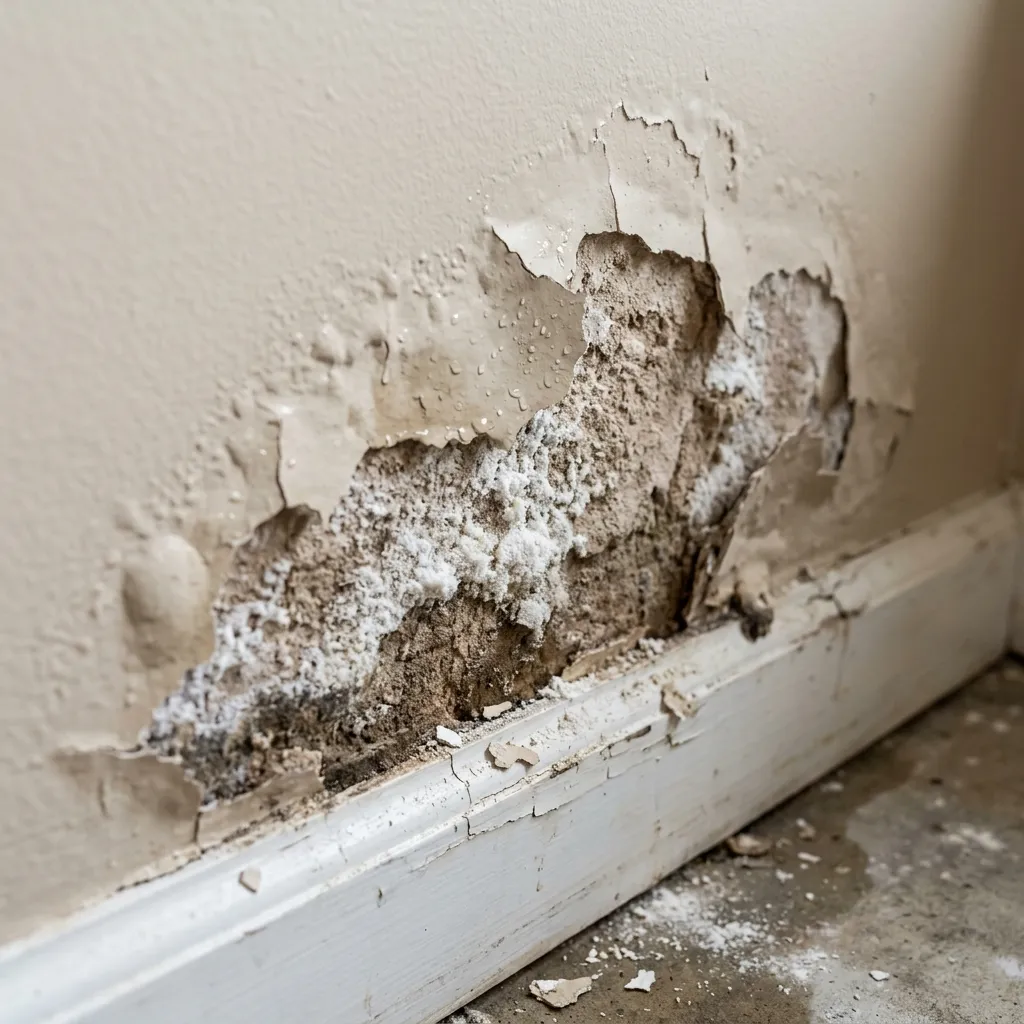
The Detective Work of Water Seepage
Recommended Product: For the best results in this area, consider using K-Seal Waterproofing.
Water is the absolute worst enemy of masonry and paint. It is insidious, traveling through microscopic capillaries in concrete, tracing along hidden plumbing pipes, and manifesting as ugly, bubbling damp patches on your beautiful interior walls.
When homeowners see a damp patch on their living room wall, their first instinct is often to hire a painter to scrape it, apply some putty, and paint over it. This is a waste of money. The damp patch will return within months, destroying the new paint.
Before you apply any waterproofing chemicals or new paint, you must play detective. You must find the source of the water. Seepage generally originates from one of four structural failures.
1. Exterior Wall Cracks (Lateral Seepage)
During the intense Indian monsoons, wind-driven rain beats relentlessly against the exterior walls of your home.
The Cause
Over time, the exterior cement plaster develops hairline cracks due to the thermal expansion and contraction of the building. These cracks act as funnels. Rainwater hits the wall, runs down the surface, and is sucked into these cracks by capillary action, eventually reaching the interior plaster and ruining the paint.
The Permanent Solution
To stop lateral seepage, you must seal the exterior envelope of the building.
- Identify and Widen: Inspect the exterior wall. Use a grinder to widen visible cracks into a 'V' shape.
- Flexible Sealing: Fill these cracks firmly with K-Seal Crack Fill. Because this filler is elastomeric, it will stretch with future building movements, ensuring the crack does not reopen.
- Elastomeric Topcoat: Standard exterior paint is rigid and will crack again. You must coat the entire exterior wall with a high-performance, high-stretch coating like Premium Exterior Emulsion. This paint forms a flexible, waterproof rubber-like skin over the masonry that bridges micro-cracks and repels driving rain.
2. Terrace Leakage (Vertical Seepage)
If the damp patches are appearing on your ceiling or at the very top of your interior walls, the roof slab is compromised.
Pro Tip: Upgrading to K-Seal Waterproofing can significantly improve the durability of your finish.
The Cause
Flat concrete terraces bear the absolute brunt of the sun's heat. The concrete expands significantly during the day and shrinks at night. This continuous stress causes micro-fractures throughout the concrete slab. Furthermore, traditional waterproofing methods (like brick-bat coba) become rigid and crack over time, allowing water to pool and seep directly into the rebar (reinforcing steel), causing structural rust.
The Permanent Solution
You must apply a liquid waterproofing membrane that can handle extreme thermal movement.
- Surface Prep: The terrace must be scrubbed completely clean of algae and dirt.
- The Primer: Apply a highly diluted coat of K-Seal Waterproofing to penetrate and seal the concrete pores.
- The Rubber Blanket: Apply two thick, undiluted coats of K-Seal Waterproofing in a cross-hatch pattern (one coat North-South, the next East-West). This creates a seamless, highly elastic, rubber-like blanket over the entire roof. It stretches with the concrete, ensuring zero water penetration.
3. Rising Dampness (Capillary Seepage)
If the paint is peeling, bubbling, and leaving a white, salty powder (efflorescence) strictly along the bottom of your ground-floor walls (just above the skirting board), you are dealing with rising dampness.
The Cause
Groundwater is being drawn up into the walls through the porous bricks and mortar, much like a sponge soaking up water from a plate. This happens when the building's foundation lacks a proper Damp Proof Course (DPC)—a physical waterproof barrier usually installed during construction.
The Permanent Solution
This is the most difficult seepage to cure because the water is coming from beneath the house.
- Strip to Bare Plaster: You must aggressively scrape off all the damaged paint and wall putty up to a height of at least 1 meter (or 1 foot above the highest visible damp mark), exposing the bare plaster.
- Chemical Blocking: Apply a cementitious waterproofing slurry to the bare plaster. Mix K-Seal SBR (Styrene Butadiene Rubber) with fresh cement according to the technical data sheet. Brush this thick slurry over the affected area.
- The Cure: The SBR polymers penetrate the plaster and block the capillaries, creating a chemical damp-proof course. Allow it to cure for a week, apply fresh putty, and repaint.
4. Faulty Plumbing (Internal Seepage)
If the damp patch is isolated, highly localized, and appears near a bathroom, kitchen, or internal pipe shaft, it is almost certainly a plumbing leak.
The Cause
A concealed PVC pipe has a broken joint, or the tile grouting inside the shower enclosure has washed away, allowing bathing water to seep into the wall cavity.
The Permanent Solution
Chemicals cannot fix broken pipes.
- The Plumber: You must hire a plumber to break the plaster, locate the leaking joint, and repair the pipe physically.
- Tile Grouting: If the plumbing is sound, inspect the bathroom tiles. Scrape out the old, dirty cement grout between the tiles and refill the joints with an epoxy-based waterproof tile grout to prevent shower water from entering the wall.
Final Check: Ensure you are using a high-quality product like K-Seal Waterproofing to guarantee long-lasting performance.
Conclusion
Water seepage is a structural symptom, not a cosmetic defect. By correctly diagnosing the path of the water—whether it is lateral driving rain, vertical terrace leaks, or rising ground dampness—and deploying the correct K-Seal Waterproofing chemistry to block it, you can permanently dry out your masonry. Only then should you invest in fresh putty and premium emulsion paint to restore the beauty of your home.
Frequently Asked Questions
Why is paint bubbling and peeling near the floor?
This is classic 'rising dampness' caused by capillary action. Ground moisture travels up through the porous bricks and mortar because the building lacks a Damp Proof Course (DPC). The moisture evaporates on the interior wall, leaving behind white alkaline salts (efflorescence) that push the paint off.
Can I just paint over a damp patch with waterproof paint?
No. If you paint over active dampness, the moisture is trapped inside the wall. The hydrostatic pressure of the trapped water will eventually blow the waterproof paint completely off the wall. You must fix the source of the leak and allow the wall to dry before repainting.
Is terrace waterproofing a DIY job?
While filling minor cracks is DIY-friendly, full terrace waterproofing requires strict protocols regarding cleaning, dilution ratios, and coating thickness. For a permanent, guaranteed result, it is highly recommended to hire professional applicators.
Recommended Next Steps
Products for this Project
Continue Reading
Need technical guidance or a bulk quotation?
Contact Our Experts