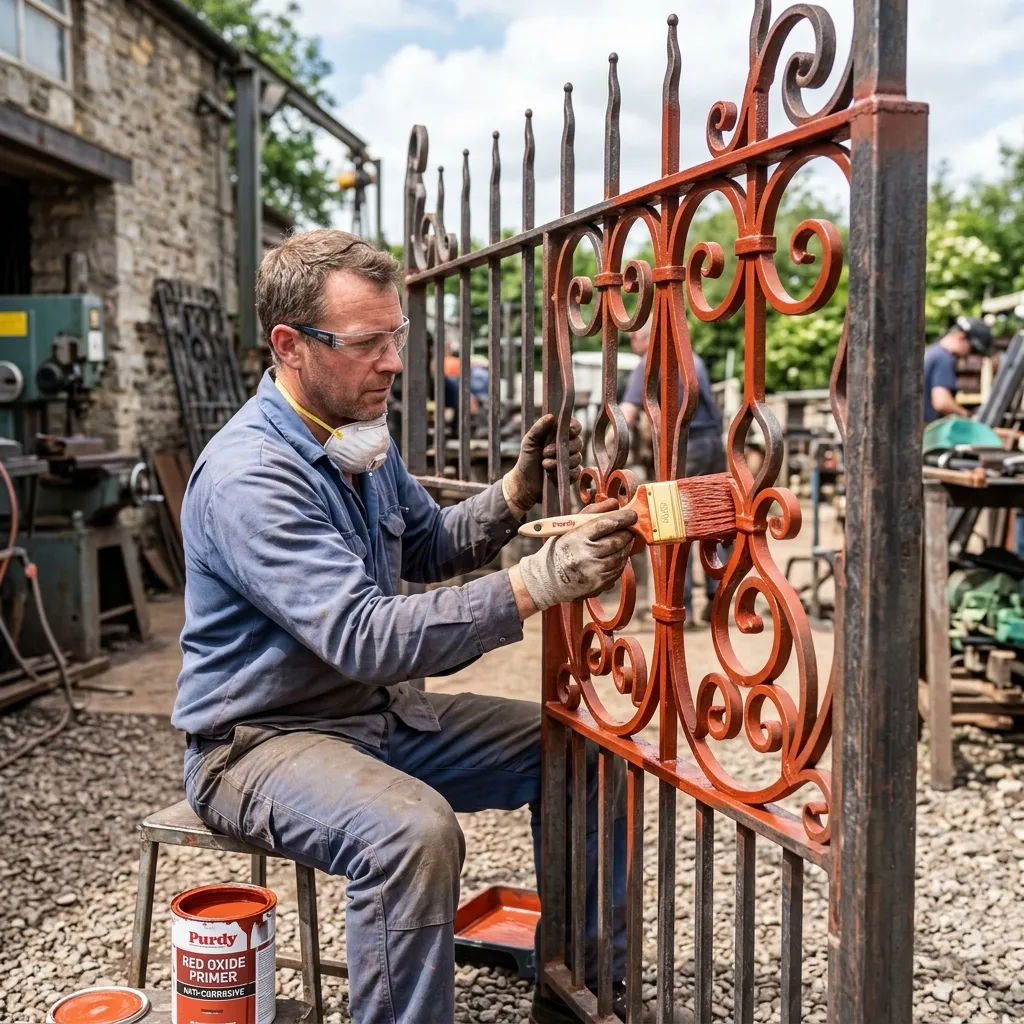
The Relentless Threat of Corrosion
Recommended Product: For the best results in this area, consider using Red Oxide Primer (WB/SB).
If you own a property in India, you are well acquainted with the battle against rust. Exterior metal elements—such as front gates, window grills, balcony railings, and corrugated tin roofs—are constantly subjected to the harshest elements. The combination of intense monsoon moisture, high humidity, and atmospheric oxygen creates the perfect environment for oxidation.
Rust (iron oxide) is not just a cosmetic eyesore; it is a structural cancer. Once rust takes hold, it literally eats away the iron, causing the metal to pit, weaken, and eventually disintegrate. For industrial structures, pipelines, and heavy machinery, corrosion failure can lead to catastrophic accidents and massive financial losses.
Stopping rust requires more than just slapping on a fresh coat of colored enamel. It requires a systematic approach to surface preparation and the use of dedicated anti-corrosive foundation coatings like Delite Paints' Red Oxide Primer.
Step 1: Aggressive Surface Preparation
The success of any metal painting project is entirely dependent on how well you prepare the surface. The number one reason paint peels off a metal gate is that the painter applied it over dirt, oil, or existing rust.
Removing the Old Rust
You must get down to the bare, stable metal. You cannot seal rust in; it must be removed.
- Manual Scrubbing: For light surface rust on small residential grills, use a stiff wire brush and coarse sandpaper (60 or 80 grit) to vigorously scrub the affected areas until the shiny metal is exposed.
- Power Tools: For larger gates or industrial applications, manual scrubbing is inefficient. Use an angle grinder equipped with a wire cup brush or a flap disc. This will rapidly strip away layers of thick, flaky rust and old, peeling paint.
- Chemical Rust Converters (Optional): If there is deep pitting where the grinder cannot reach, you can apply a chemical rust converter (usually phosphoric acid-based) that reacts with the remaining iron oxide, turning it into a stable, black iron phosphate crust that can be painted over.
Cleaning the Metal
Once the rust is removed, the metal will be covered in fine dust and microscopic oils (often left behind from the manufacturing process or from human hands).
- Solvent Wipe: Take a clean rag soaked in mineral spirits, paint thinner, or a degreaser, and aggressively wipe down the entire metal surface.
- Dry Completely: Allow the solvent to evaporate completely. The metal should be perfectly dry and oil-free.
Step 2: Immediate Priming (The Critical Window)
Pro Tip: Upgrading to Red Oxide Primer (WB/SB) can significantly improve the durability of your finish.
This is where timing is everything.
Bare steel is highly reactive. In the humid Indian climate, a perfectly clean piece of steel can begin to develop microscopic "flash rust" within 3 to 4 hours. If you spend the whole day grinding your gate clean and wait until the next morning to prime it, you are already painting over a new layer of rust.
Applying Red Oxide Primer
The moment the metal is clean and dry, apply a coat of Delite Paints' Red Oxide Primer.
- Why Red Oxide? This primer is formulated with synthetic alkyd resins and specific rust-inhibiting pigments. It acts as a sacrificial barrier, physically blocking water and oxygen from reaching the raw steel.
- Application: Use a high-quality brush or a spray gun. Ensure the primer penetrates into every welded joint, corner, and crevice, as these are the exact spots where water tends to sit and rust usually begins.
- Drying: Allow the primer to cure for at least 8 to 12 hours. It will dry to a tough, matte red finish.
Step 3: Industrial-Grade Protection (Optional)
If you are dealing with components that require extreme protection—such as the undercarriage of vehicles, cast iron pipes, industrial chassis, or metal components buried in damp soil—standard enamels may not be enough.
For these extreme environments, apply Black Japan.
- What is it? Black Japan is a specialized, bituminous (asphalt-based) liquid coating.
- The Benefits: It dries to a highly durable, thick, glossy black finish. Because it is bituminous, it provides an unparalleled level of waterproofing and chemical resistance. It is the ultimate heavy-duty shield against severe corrosion in industrial applications.
Step 4: The Final Topcoat
If you are painting a residential gate or window grill, you will want a beautiful, colorful finish over your red primer.
- Sanding the Primer: Once the Red Oxide Primer is fully cured, lightly scuff the surface with fine sandpaper (220 grit). This provides a slight "tooth" for the topcoat to grip onto. Wipe away the dust.
- Apply Synthetic Enamel: Apply two coats of a high-quality synthetic enamel paint in your desired shade.
- The Shell: The enamel topcoat provides the aesthetic color and creates a hard, glossy, weather-resistant shell that protects the primer from UV rays and physical abrasion.
Final Check: Ensure you are using a high-quality product like Red Oxide Primer (WB/SB) to guarantee long-lasting performance.
Conclusion
A rusted metal gate is not a lost cause, but treating it requires diligence. By investing the time to aggressively remove the existing rust, instantly sealing the bare metal with an anti-corrosive Red Oxide Primer, and finishing with a durable topcoat, you can add decades to the life of your exterior metalwork. Stop rust before it starts, and protect your investments.
Frequently Asked Questions
Can I paint directly over rust?
Absolutely not. Rust is active iron oxide. If you paint over it, the rust will continue to expand underneath the paint film, eventually pushing the new paint off the metal in large flakes. You must remove all loose rust down to bare metal before painting.
Why do I need a primer for metal?
Metal does not have pores like wood or plaster, making it very difficult for topcoat paints to stick. A high-quality Red Oxide Primer contains specific binders that adhere tightly to smooth metal, and it contains rust-inhibiting chemicals that protect the steel.
How quickly does bare metal rust?
In high humidity or coastal areas, bare, sanded steel can begin to flash-rust within hours. You should always apply your anti-corrosive primer on the exact same day that you sand or grind the metal clean.
Recommended Next Steps
Products for this Project
Continue Reading
Need technical guidance or a bulk quotation?
Contact Our Experts