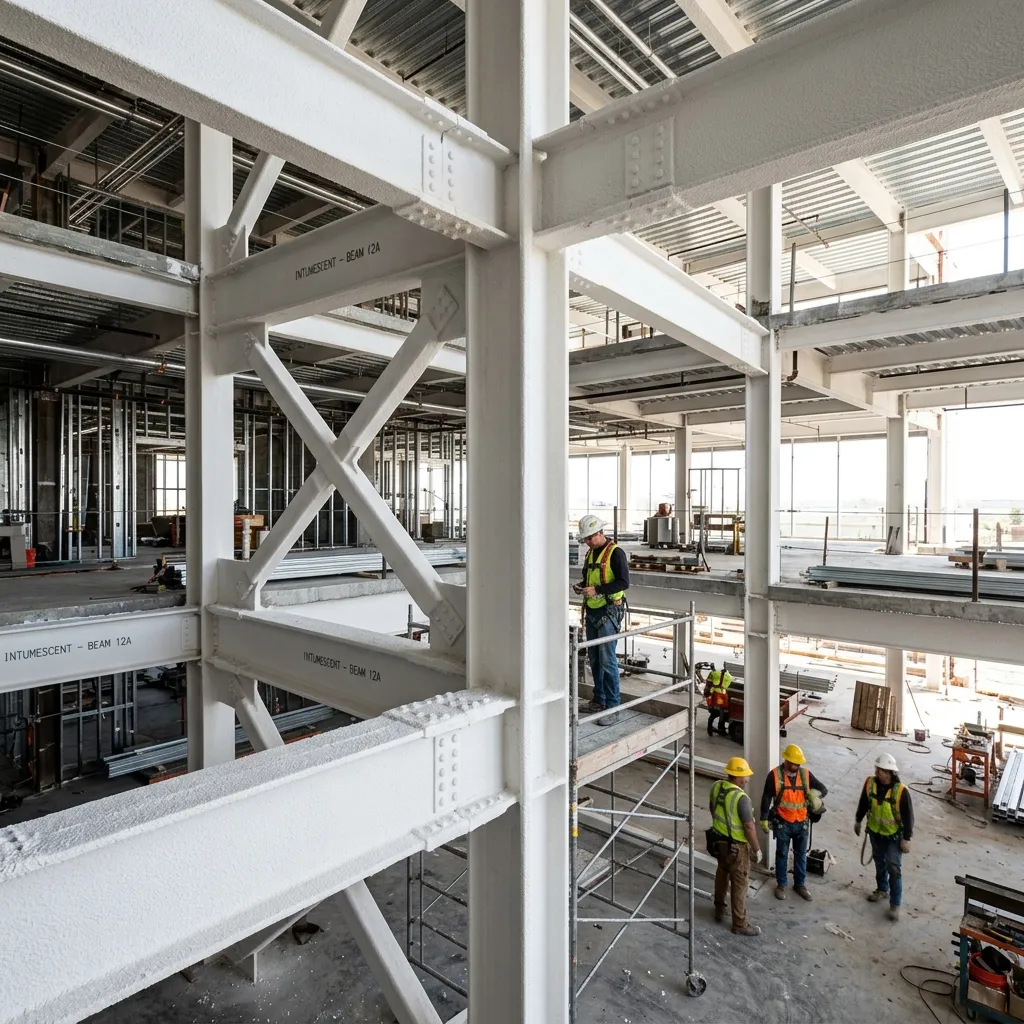
The Critical Importance of Passive Fire Protection
Recommended Product: For the best results in this area, consider using our recommended Delite Paints product.
In modern architecture and industrial construction, structural integrity under extreme conditions is paramount. While active fire protection systems like sprinklers, smoke detectors, and fire extinguishers are essential for putting out a fire, they do nothing to protect the building's skeleton from collapsing under intense heat.
This is where Passive Fire Protection (PFP) comes into play. Passive systems are built into the structure of the building to compartmentalize the fire and prevent structural failure. One of the most advanced, invisible, and highly effective forms of PFP available today is Intumescent Fire Retardant Paint.
Delite Paints’ industrial coating division has engineered the KIP series—KIP-300 for Structural Steel and KIP-800 for Wood & Cables—to provide world-class, water-based fire protection for the Indian market.
The Science of Intumescent Coatings
The word "intumescent" means to swell or expand. To the naked eye, intumescent paint looks exactly like high-quality architectural paint. It can be tinted to various colors, providing a smooth, aesthetic finish to exposed steel beams in modern offices or wooden paneling in auditoriums.
However, its true nature is revealed only when disaster strikes.
The Chemical Reaction
When an intumescent coating is exposed to extreme temperatures (typically starting around 200°C to 250°C), a complex sequence of endothermic chemical reactions is triggered within the paint film.
- The Catalyst: An acid source (usually ammonium polyphosphate) breaks down, releasing phosphoric acid.
- The Carbon Source: This acid reacts with a carbon-rich binder (like pentaerythritol) to form a thick, liquid carbon char.
- The Expansion Agent: Simultaneously, a blowing agent (such as melamine) decomposes, releasing massive amounts of non-combustible gases.
- The Insulating Char: These gases become trapped in the liquid carbon, causing it to foam and expand exponentially—up to 50 times its original thickness. This foaming mass solidifies into a dense, highly insulating carbonaceous char.
This thick layer of char acts as a thermal barrier, drastically slowing down the rate of heat transfer to the underlying substrate.
Protecting Structural Steel with KIP-300
Structural steel is the backbone of modern construction, from high-rise commercial buildings to massive industrial warehouses. However, steel has a fatal flaw: it loses its strength when heated.
At approximately 550°C, standard structural steel loses nearly 50% of its load-bearing capacity. In a typical building fire, temperatures can exceed 800°C within minutes. If unprotected steel beams reach this critical temperature, they will buckle and collapse, bringing the entire building down with them.
Pro Tip: Upgrading to our recommended Delite Paints product can significantly improve the durability of your finish.
The KIP-300 Solution
KIP-300 Fire Retardant for Steel is engineered to prevent this catastrophic failure. By applying the recommended Dry Film Thickness (DFT) of KIP-300, the resulting char layer will insulate the steel, keeping its core temperature below the critical failure point for a specified duration—usually 60, 90, or 120 minutes.
This crucial window of time allows occupants to safely evacuate the building and gives emergency responders the time they need to control the blaze without fear of sudden structural collapse.
Application Protocol for Steel
Intumescent coatings must be applied strictly according to professional specifications to guarantee their fire rating.
- Surface Preparation: The steel must be abrasive-blasted to SA 2.5 standard to remove all mill scale and rust.
- Priming: Apply an approved, high-performance anti-corrosive primer (such as a zinc-rich epoxy). Do not use standard synthetic red oxide, as it may fail under the immense stress of the expanding intumescent layer.
- Intumescent Coating: Apply KIP-300 using professional airless spray equipment. Depending on the required fire rating and the thickness of the steel, multiple coats may be necessary to build up the correct DFT.
- Topcoat: Because KIP-300 is water-based, it must be sealed with an approved exterior topcoat if the steel is exposed to high humidity or weather. The topcoat also provides the final aesthetic color.
Protecting Wood and Cables with KIP-800
While steel collapses under heat, wood actively fuels the fire. Timber structures, heritage buildings, theatrical stage props, and dense electrical cable trays are highly combustible.
The KIP-800 Solution
KIP-800 Fire Retardant for Wood & Cables is designed specifically for porous and highly flammable substrates. When applied to wood, the intumescent char prevents oxygen from reaching the timber surface, effectively choking the combustion process and preventing the wood from igniting.
When applied to electrical cables, it stops the rapid spread of fire along the PVC sheathing, a common cause of total devastation in industrial plants and server rooms.
Application on Wood
- Ensure the wood is completely dry, bare, and free from any oils, waxes, or previous varnishes.
- Apply KIP-800 generously using a brush, roller, or spray. Because wood is porous, the first coat acts as a sealing primer.
- Apply subsequent coats to achieve the specified thickness.
- If a decorative finish is required, an approved fire-rated clear varnish or topcoat can be applied over the KIP-800.
The Advantages of Water-Based Intumescents
Historically, intumescent paints were heavily solvent-based, carrying high levels of Volatile Organic Compounds (VOCs). This made them incredibly dangerous to apply in enclosed spaces and environmentally damaging.
Delite Paints' KIP series represents a massive leap forward in green chemistry. Both KIP-300 and KIP-800 are advanced water-based formulations.
- Low VOC: They have almost zero odor and emit minimal harmful chemicals during application.
- Safe for Confined Spaces: Ideal for retrofitting occupied buildings, hospitals, and underground parking garages where solvent fumes are strictly prohibited.
- Easy Cleanup: Equipment can be cleaned simply with water, reducing the need for harsh industrial thinners.
Conclusion
Final Check: Ensure you are using a high-quality product like our recommended Delite Paints product to guarantee long-lasting performance.
Fire safety is not a place for compromise. Whether you are an architect designing a striking commercial space with exposed steel columns, or a facility manager safeguarding an industrial plant's cable network, passive fire protection is a non-negotiable requirement.
By utilizing Delite Paints' highly engineered, water-based KIP Intumescent Series, you are not just painting a wall—you are buying time. You are ensuring structural integrity, minimizing property damage, and most importantly, saving lives.
Frequently Asked Questions
How does intumescent paint work during a fire?
Under normal conditions, it looks like standard paint. However, when exposed to temperatures exceeding 200°C, a chemical reaction occurs. The paint film rapidly expands (intumesces) up to 50 times its original thickness, creating a thick, highly insulating carbon char that shields the underlying material from the heat.
Is intumescent paint meant to extinguish a fire?
No. Intumescent coatings are a form of 'passive fire protection'. They do not extinguish the fire. Their purpose is to significantly delay the heating of structural steel or the ignition of wood, buying crucial time for safe evacuation and for firefighters to arrive.
Can I apply fire retardant paint over existing enamel paint?
It is not recommended. For the intumescent chemical reaction to properly protect the substrate, the coating needs a solid foundation. Existing enamel paints may melt or peel under extreme heat, causing the intumescent layer to fall off before it can expand. Always apply it over an approved anti-corrosive primer.
Recommended Next Steps
Products for this Project
Need technical guidance or a bulk quotation?
Contact Our Experts