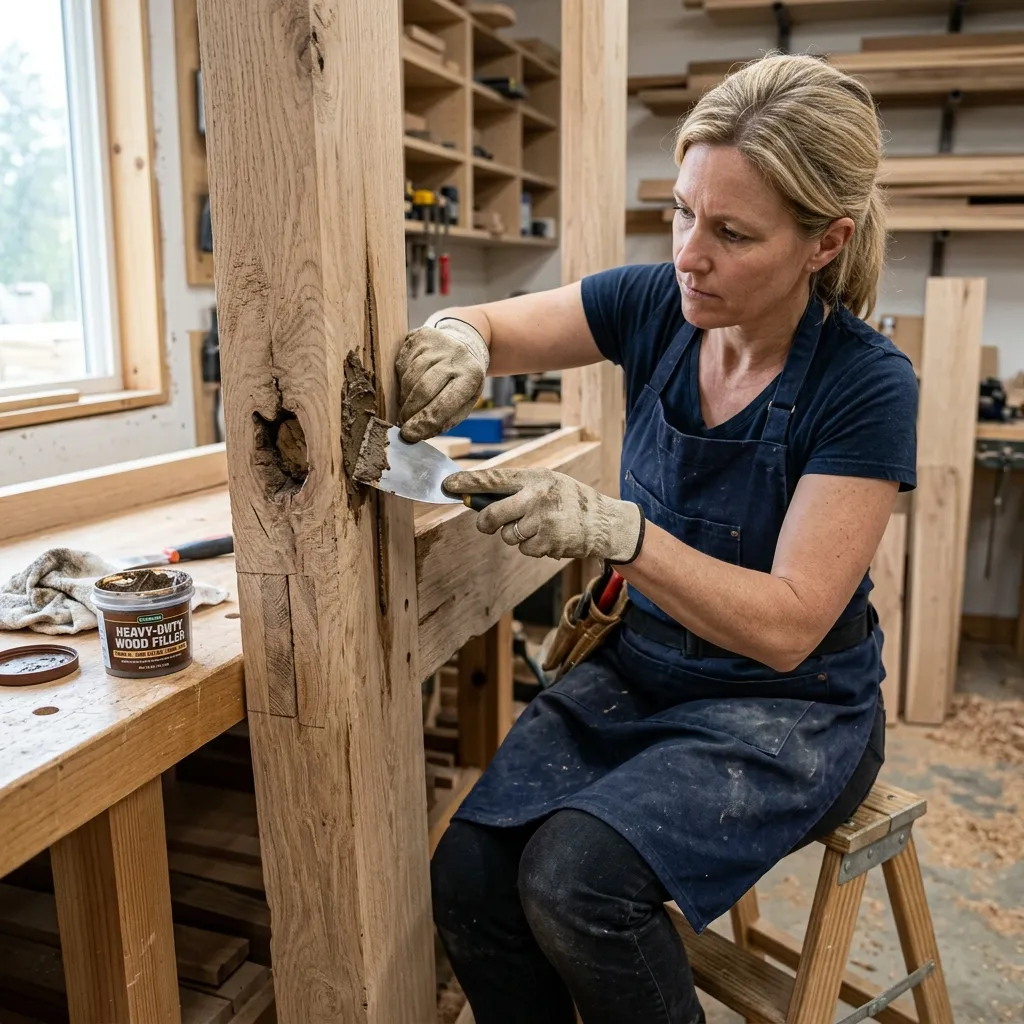
The Ultimate Professional Guide to Wood Repair
Recommended Product: For the best results in this area, consider using KEFIL Wood Filler (Powder).
Whether you are a professional carpenter restoring vintage furniture, a warehouse manager looking to extend the lifespan of industrial wooden pallets, or a homeowner fixing a dented door, mastering wood repair is an essential skill. For decades, the industry relied on subpar solutions like chalk mitti, Plaster of Paris (POP), or basic acrylic putties. The problem? They all shrink, crack, or fall out over time.
Enter KEFIL Wood Filler, a revolutionary, patented product developed by Delite Paints. Designed specifically to overcome the limitations of traditional fillers, KEFIL is a zero-shrinkage, high-strength formulation that bonds seamlessly with the wood grain, creating a repair that is literally as strong as the wood itself.
In this comprehensive guide, we will break down the science of wood fillers, explain why traditional methods fail, and provide you with a step-by-step masterclass on how to use KEFIL for flawless, permanent repairs.
Why Traditional Wood Fillers Fail
To understand why KEFIL is considered a breakthrough in the Indian paint and coatings industry, you first have to understand why legacy solutions fail. Wood is a hygroscopic material—it constantly absorbs and releases moisture depending on the humidity of the environment. This causes the wood to expand and contract.
The Problem with Chalk and Putty
When a carpenter mixes chalk powder (mitti) with adhesive (Fevicol) or uses a standard acrylic putty, they are introducing a rigid or overly porous material into a dynamic substrate. As the water or solvent in the putty evaporates, the volume of the filler decreases. This results in shrinkage—a slight depression or gap that appears where the filler was applied.
Furthermore, when the wood naturally expands during the monsoon season, the brittle chalk mixture cannot handle the stress, leading to cracking and popping. If you’ve ever seen a filled nail hole suddenly become visible again after a few months, shrinkage and poor adhesion are the culprits.
The Patented KEFIL Advantage
KEFIL Wood Filler fundamentally changes this dynamic. Formulated using advanced cross-linking polymers and specialized mineral extenders, KEFIL undergoes a chemical curing process rather than simple evaporation.
- Zero Shrinkage: The volume you apply is the exact volume you get after curing.
- Superior Adhesion: It chemically bonds with the wood fibers, ensuring it will never pop out, even under heavy impact or vibration.
- Machinability: Once cured, KEFIL can be sanded, sawed, drilled, or even nailed without shattering or crumbling.
Industrial Application: Wooden Pallet Repair
One of the most significant applications of KEFIL is in the logistics and warehousing sector. Heavy-duty wooden pallets endure immense physical abuse—forklift impacts, massive weight loads, and constant dragging.
When a pallet splinters, snaps, or develops deep gouges, replacing it is expensive. Previously, repairing them was difficult because standard putties would instantly shatter under the weight of a forklift load.
Saving Costs with KEFIL
Logistics companies across India have adopted KEFIL as their go-to solution for pallet repair. By mixing the powder into a thick paste and aggressively troweling it into splinters and cracks, maintenance teams can restore the structural integrity of a damaged pallet in hours. Because KEFIL cures to a rock-hard finish that resists compression, the repaired pallets can be put right back into service, saving thousands of rupees in replacement costs.
Step-by-Step Masterclass: How to Use KEFIL Wood Filler
Pro Tip: Upgrading to KEFIL Wood Filler (Powder) can significantly improve the durability of your finish.
Applying KEFIL is straightforward, but following the correct professional procedure ensures a flawless, invisible repair that will last a lifetime. Here is the step-by-step process.
Step 1: Surface Preparation and Cleaning
Never apply any filler to a dirty or rotting surface.
- Remove Debris: Use a wire brush or a scraper to remove any loose splinters, dirt, or degraded wood fibers from the crack or hole.
- Degrease: If the wood has been exposed to oil or grease (common in industrial settings), wipe it down with a mild solvent and allow it to dry.
- Sand the Edges: Lightly sand the edges of the defect with 80-grit sandpaper. This creates a "tooth" for the KEFIL to grip onto, maximizing adhesion.
Pro Tip: For highly porous or extremely dry wood, wiping the area with a slightly damp cloth can prevent the wood from sucking the moisture out of the KEFIL paste too quickly.
Step 2: Mixing the Perfect Paste
KEFIL is supplied as a powder, which gives you complete control over the consistency based on the repair you are performing.
- Take the required amount of KEFIL powder in a clean, plastic container.
- Slowly add clean, potable water. Do not add all the water at once.
- Use a putty knife to mix it vigorously. You are aiming for a smooth, lump-free paste.
- The Consistency Test: For deep vertical cracks, mix it slightly thicker (like peanut butter) so it doesn’t sag. For shallow surface imperfections, a slightly creamier mix will be easier to spread.
Important Note: KEFIL begins to chemically cure once mixed with water. Only mix an amount that you can comfortably use within 30 to 45 minutes.
Step 3: Application Technique
The secret to a permanent repair is ensuring there are no air pockets trapped beneath the filler.
- Take a small amount of the KEFIL paste on a flexible steel or plastic putty knife.
- Force it in: Press the paste firmly into the crack or hole. Do not just skim the surface. Force the material all the way to the bottom of the defect to ensure complete filling.
- Overfill Slightly: Because KEFIL is incredibly easy to sand, always leave a slight mound or crown over the repair area. This ensures that when you sand it down, it will be perfectly flush with the surrounding wood.
Step 4: Curing and Drying
Unlike solvent-based putties that dry from the outside in, KEFIL cures uniformly.
- Allow the repair to dry undisturbed for 2 to 3 hours.
- In highly humid conditions (like monsoons), you may need to wait up to 4 hours.
- You will know it is ready when the surface is rock-hard to the touch and rings slightly when tapped with the handle of a putty knife.
Step 5: Sanding and Leveling
Once fully cured, it is time to blend the repair into the surrounding surface.
- Start with a medium grit sandpaper, such as 150-grit or 180-grit.
- Sand the mound down until it is perfectly flush with the wood. KEFIL sands beautifully to a smooth, chalk-free finish.
- Finish with a fine 320-grit sandpaper to polish the surface and prepare it for coating.
Polishing and Painting Over KEFIL
One of the biggest complaints about traditional putties is that they absorb paint or polish unevenly, leaving an ugly "patch" that is visible through the final finish. KEFIL is engineered to accept coatings uniformly.
For Opaque Paint Finishes
If you are painting the wood (e.g., doors, windows, or cabinets):
- Apply a coat of Delite Wood Primer over the entire surface, including the repaired area.
- Follow up with your topcoat of choice, whether it is a Wood Finish Single Pack enamel or a water-based acrylic.
- The KEFIL repair will be completely invisible and will not sink or telegraph through the glossy paint.
For Transparent Polish Finishes
If you are staining or polishing the wood to reveal the grain:
- Ensure you have sanded the KEFIL perfectly flush.
- Apply your wood stain. Note that KEFIL, like any filler, will absorb stain slightly differently than the surrounding natural wood.
- Proceed with your Melamine Wood Finish or NC Sanding Sealer. The filler will remain rock-hard beneath the polish, ensuring the clear coat never cracks.
Common Mistakes to Avoid
Even with a premium product like KEFIL, application errors can compromise the result. Avoid these common pitfalls:
- Mixing with dirty water: Always use clean, potable water. Contaminated water can interfere with the chemical curing process.
- Adding too much water: A runny, soupy mix will lose its structural strength and take excessively long to dry. Stick to a thick paste.
- Failing to force it into the crack: If you only skim the surface, the repair is superficial and lacks mechanical grip.
- Sanding too early: If you sand before the KEFIL is rock hard, it may crumble or pull out of the defect. Patience is key.
Conclusion
Final Check: Ensure you are using a high-quality product like KEFIL Wood Filler (Powder) to guarantee long-lasting performance.
Whether you are salvaging a battered industrial pallet or perfecting a custom piece of wooden furniture, the filler you use dictates the longevity of your work. By switching from outdated chalk mixtures to Delite Paints' patented KEFIL Wood Filler, you are guaranteeing a repair that will not shrink, crack, or fail.
Follow the techniques outlined in this guide, and experience the strength, reliability, and flawless finish that professionals across India trust.
Frequently Asked Questions
Does KEFIL Wood Filler shrink or crack after drying?
No. Unlike traditional putty or chalk-powder mixes, KEFIL Wood Filler is a patented, zero-shrinkage formulation. Once it sets and cures, it maintains its exact volume, preventing any future cracking or sinking.
How long does KEFIL take to dry?
KEFIL sets rock-hard within 2 to 3 hours depending on ambient temperature and humidity. Once fully dry, it can be sanded, drilled, or nailed just like natural wood.
Can I use KEFIL on exterior wooden surfaces?
Yes, once cured, KEFIL provides excellent durability. However, it must be coated with an appropriate exterior wood primer and topcoat to protect it from direct UV and rain exposure.
Is KEFIL compatible with melamine or NC polish?
Absolutely. KEFIL is highly sandable and provides a perfect base for single-pack NC lacquers, two-pack melamine, and even PU wood finishes without causing any bubbling or adhesion issues.
What is the mixing ratio for KEFIL powder?
Mix KEFIL powder with clean water to form a thick, workable paste. There is no strict fixed ratio, but aiming for a consistency similar to peanut butter is ideal for filling deep cracks and gaps.
Recommended Next Steps
Products for this Project
Continue Reading
Need technical guidance or a bulk quotation?
Contact Our Experts